Good news first: most of the getting-ready is the painter's job, not yours. Covering floors, taping, patching and protecting furniture all come with a proper interior paint job. What helps from your side is clearing the small stuff, making a few decisions early and knowing what the house will be like while the crew is working.
This is the list we'd walk you through on an estimate visit, written down so you can plan ahead.
What you move and what the painters handle.
The simple rule: you take care of anything small, fragile or personal. The crew handles the heavy and the messy.
Your part
- Pictures, mirrors, clocks and wall shelves.
- Everything on tables, dressers, bookshelves and windowsills.
- Lamps, electronics and anything with a cord you'd rather not have unplugged by someone else.
- Breakables, plants, collectibles and anything that matters to you.
- Clothes and stored items in closets, if the closets are getting painted.
The crew's part
- Sliding big furniture to the middle of the room and covering it.
- Covering floors, wall to wall, before any work starts.
- Taking off outlet covers, switch plates and most hardware, then putting them back.
- Taping edges, patching holes and sanding.
- Cleaning up at the end of each day.
Choose colors and sheens before the start date.
Color decisions made on the first morning slow everything down. Settle them before the start, and test them on your own walls. A paint chip under store lights looks different on a north-facing bedroom wall at dusk.
Paint a couple of large swatches on different walls in each room and look at them in the morning, afternoon and at night with the lights on. Live with them for a bit before you commit.
Which sheen goes where
Sheen is how shiny the paint dries. Flatter finishes hide wall flaws but are harder to scrub. Shinier finishes clean up easily but show every bump and patch. Here's the usual starting point:
- Ceilings: flat. It hides the small waves and patches that ceilings always have.
- Living rooms, dining rooms and bedrooms: matte or eggshell. A soft look that still wipes down.
- Hallways and kids' rooms: eggshell or satin, because hands and backpacks hit these walls.
- Kitchens and bathrooms: satin, which stands up better to steam and scrubbing.
- Trim, doors and built-ins: semi-gloss, for a hard finish that cleans easily.
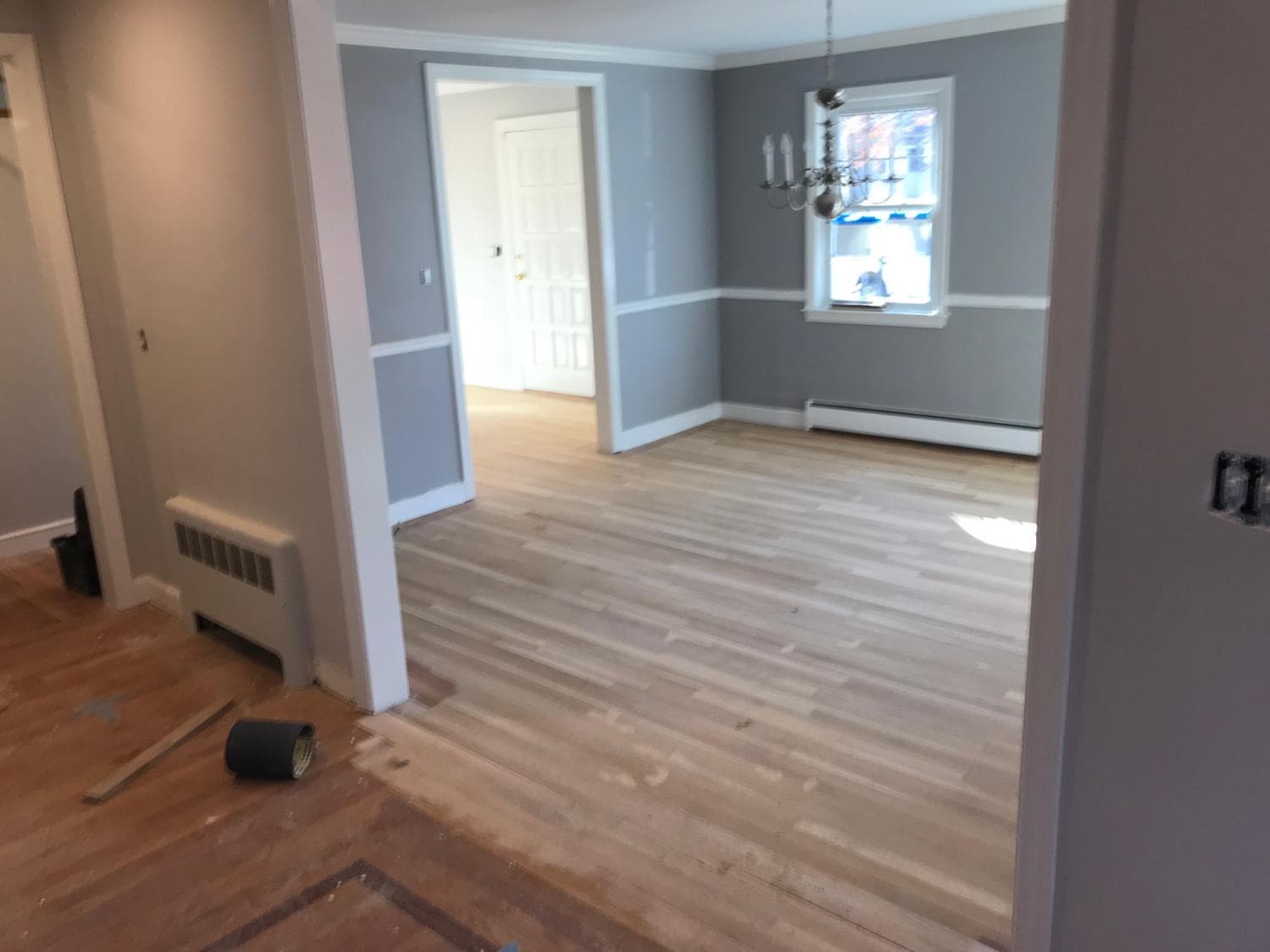
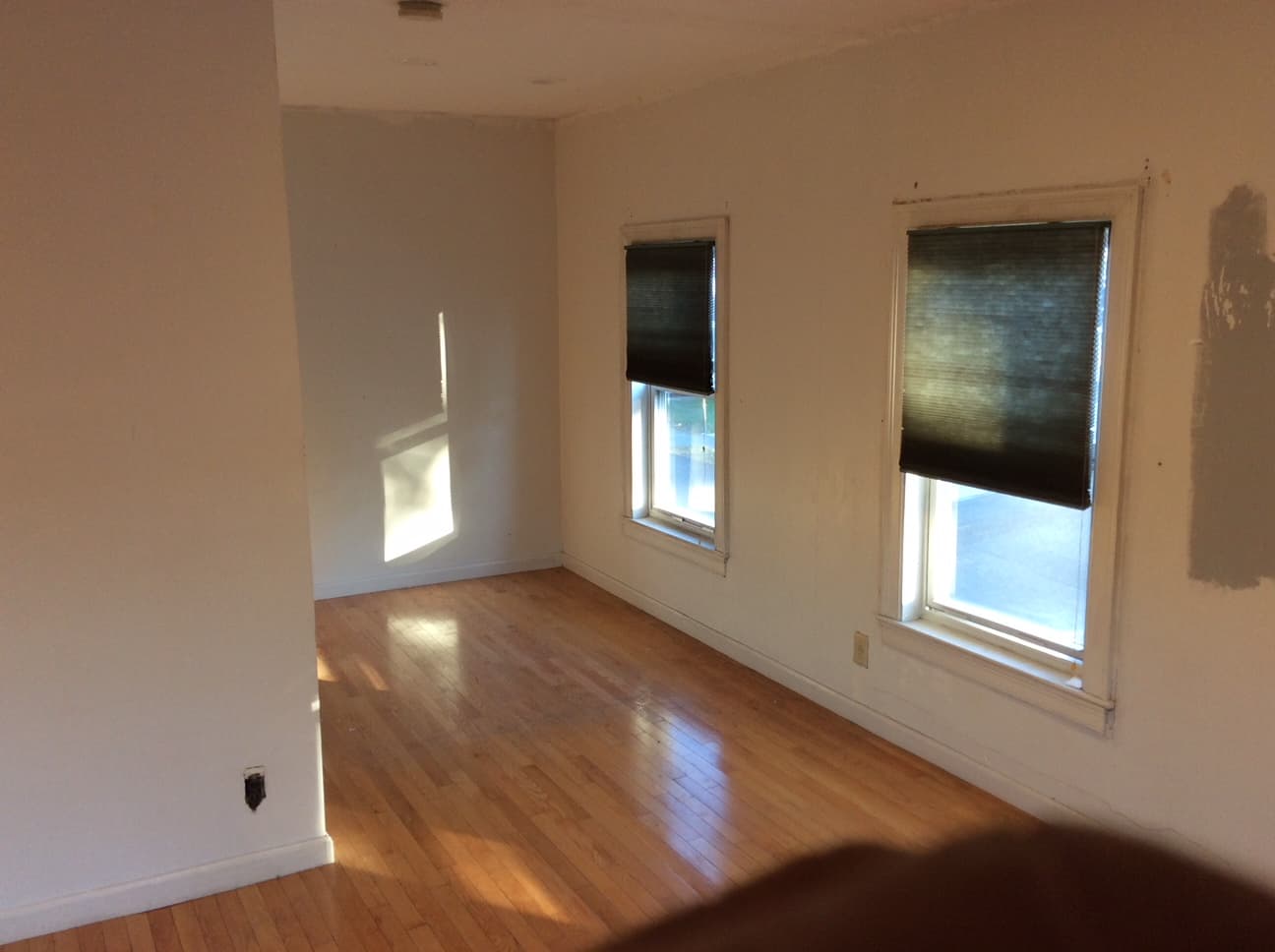
Point out the patching you care about.
Painters fill nail holes, small dings and hairline cracks as part of the prep. Where you can help is pointing out the spots that bug you: the dent behind the door, the crack over the window that keeps coming back, the old anchor holes from a TV mount.
Older New England houses often have plaster walls, and plaster cracks are their own thing. A crack that keeps returning may need more than a smear of filler. If your walls have bigger problems, like loose plaster or old wallpaper underneath the paint, that's a different conversation. Our post on wallpaper removal and skim coating goes through those repairs.
Living at home while the painting happens.
Most people stay home during an interior paint job. It just takes a little planning so you're not sharing a hallway with a ladder.
- Plan which rooms are off-limits and when. Ask your painter for the order of rooms so you can shift sleeping, working and homework spots ahead of time.
- Keep pets in a closed room or out of the house. Wet paint, open cans and an open door are a bad mix for a curious dog or cat.
- Keep a bathroom free. If a bathroom is on the list, make sure there's another one you can use.
- Air it out. Open windows and run fans when the weather allows. Ask your painter about lower-odor paint if anyone in the house is sensitive to smells.
- Don't rush the furniture back. Walls can feel dry to the touch before they're ready to have a dresser pushed against them.
The day-before checklist.
- Walls cleared of art, mirrors, shelves and curtain rods you want to keep.
- Tabletops, shelves and windowsills emptied.
- Valuables and medications put away somewhere safe.
- Closets emptied if they're on the list.
- Pets set up away from the work area.
- Colors and sheens confirmed for every room, written down.
- A clear path from the door to the work rooms.
- Parking spot open for the crew's truck.
- A list of the dents and cracks you want looked at.
- Your phone number in the painter's hands, plus a backup contact.
Want ideas before you pick colors? Our gallery shows real rooms we've painted. If you're in the area, the page on house painting in Medford covers what we see in local homes.
Common questions
No. Clear small items, art and anything fragile, and the crew will move big pieces to the center of the room and cover them.
Yes, most people do. Plan around the rooms being worked on, keep pets away from the work area and air out the house when you can.
Semi-gloss is the usual choice for trim and doors, because it's durable and wipes clean.