Is this a built-in, or just a bookcase? That's the question we get asked most on carpentry walkthroughs. Sometimes the honest answer is that a good store-bought piece will do the job. Other times, the space is so odd that nothing off the shelf will fit without leaving gaps, wasted corners or a wobble.
Here's how to think it through before you spend money either way.
Where a built-in earns its keep.
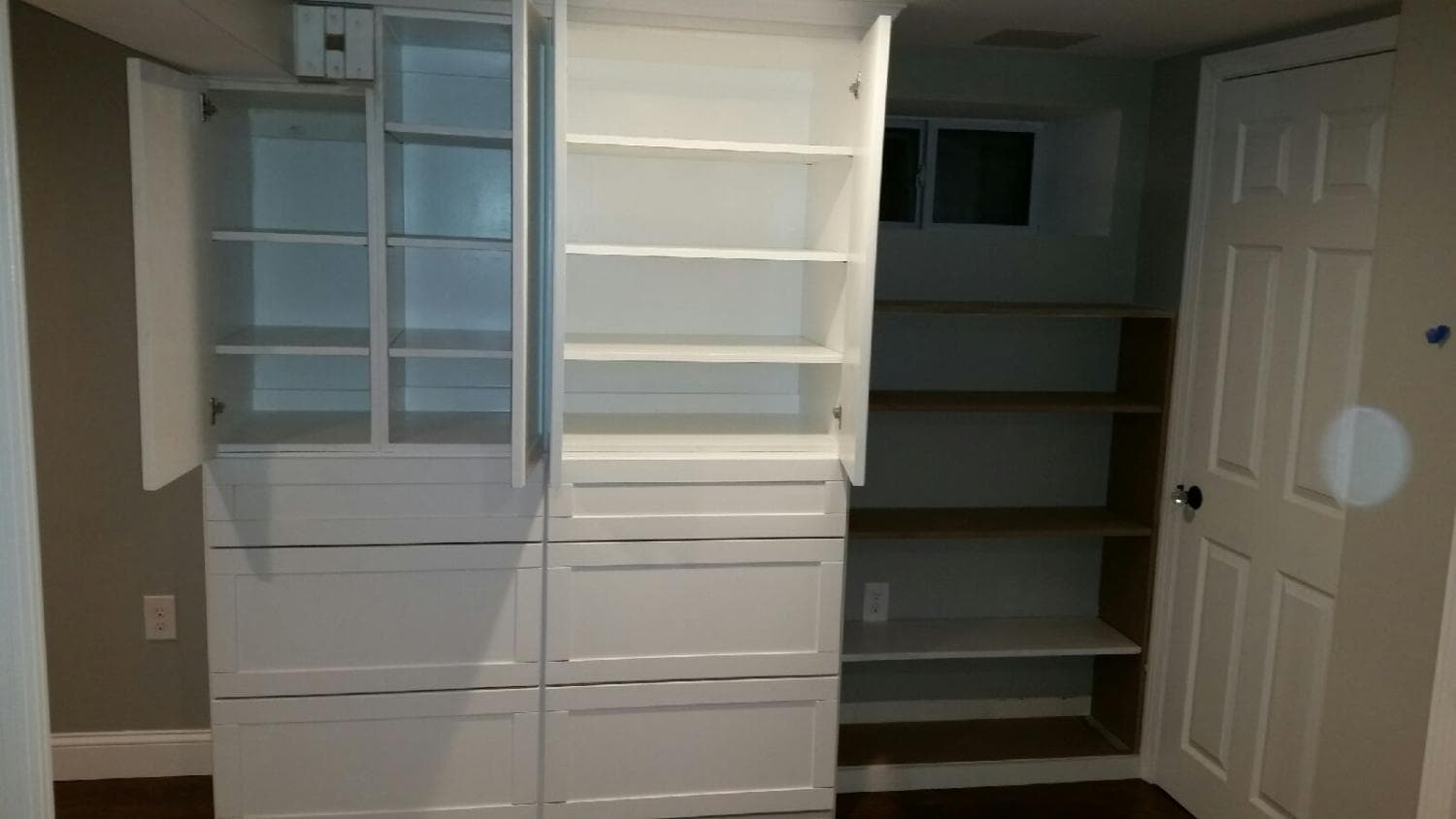
A built-in is made for one spot in one house. That's what you're paying for. It makes the most sense where standard furniture can't fit well:
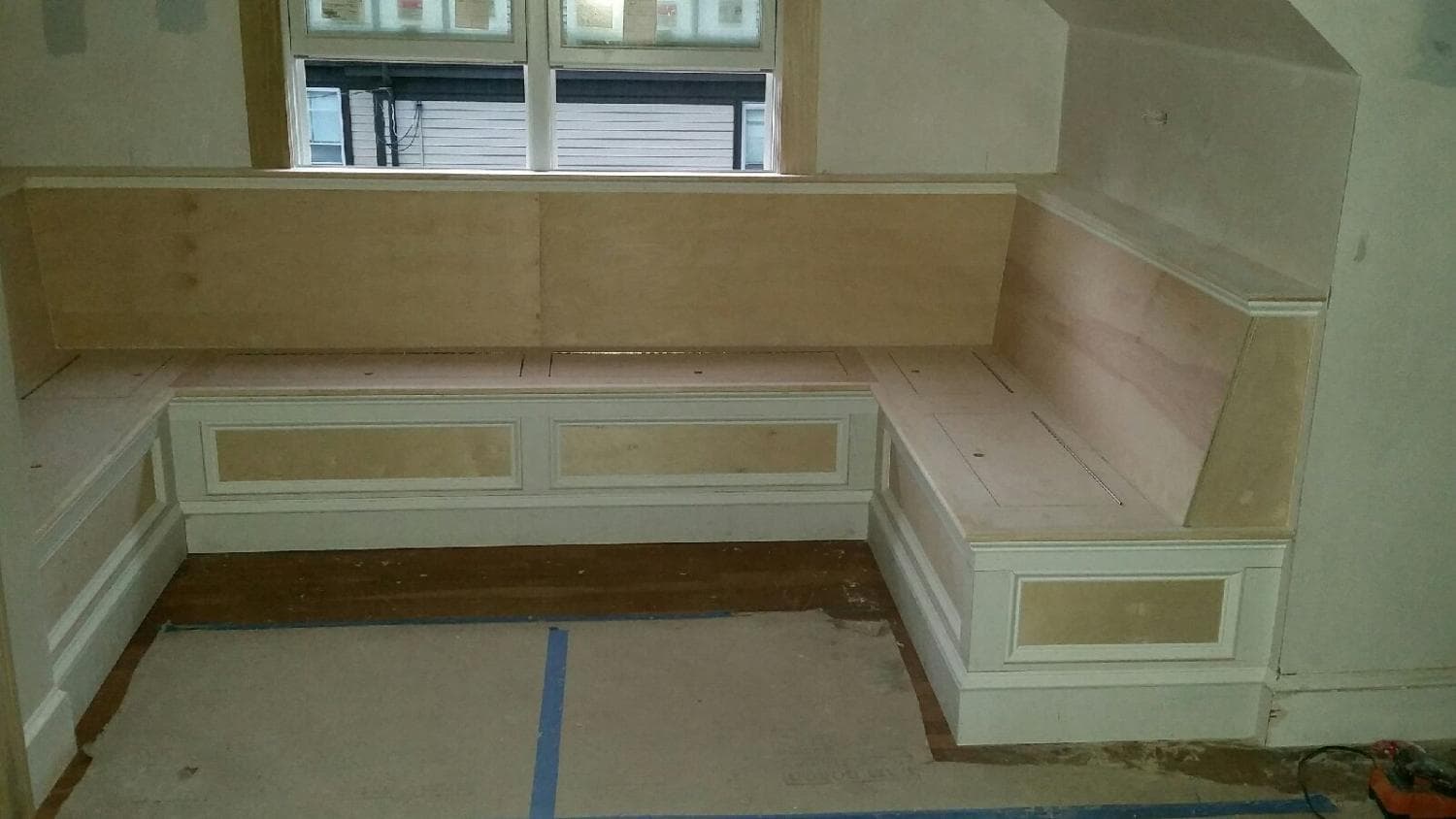
- Odd walls. Slanted ceilings, short knee walls, alcoves and bump-outs that leave a freestanding piece floating with gaps around it.
- Under windows. A window seat turns an awkward wall into seating with storage below.
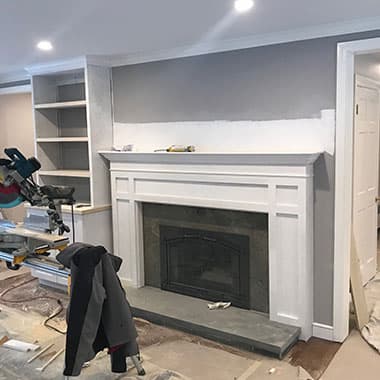
- Around a fireplace. Shelves and cabinets on both sides of a mantel give the room a finished center.
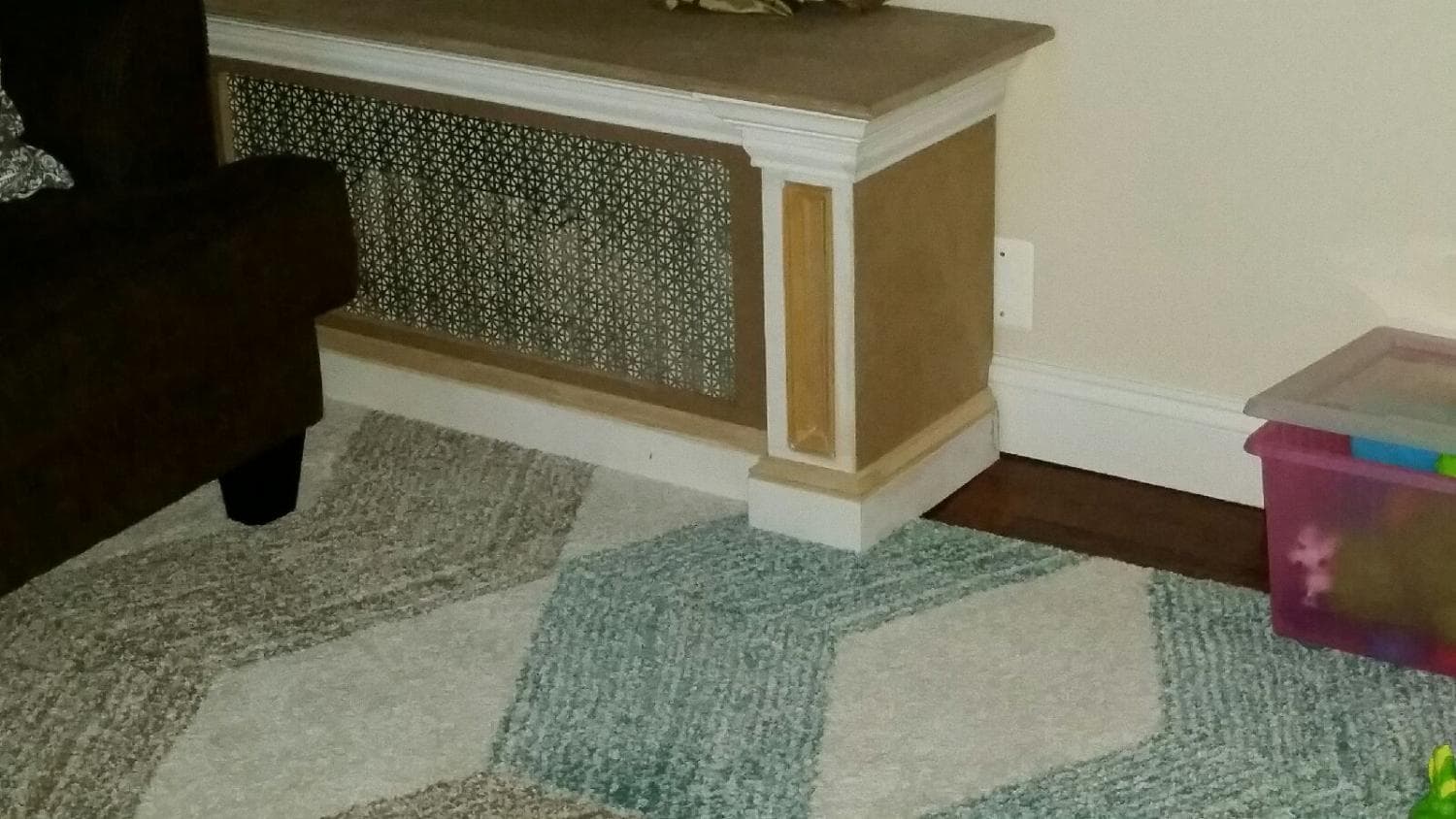
- Over radiators. A radiator cover with a grille front hides the radiator and adds a shelf on top.
- Next to doors and in hallways. Shallow cubbies or cabinets fit spaces too narrow for regular furniture.
- Walls that aren't straight. Older New England homes rarely have perfectly plumb walls or level floors. A built-in can be scribed to fit them.
When store-bought storage is fine.
Store-bought storage is the right call more often than a carpenter might admit. If any of these sound like you, start there:
- The wall is flat, square and a standard height.
- You're planning to move soon and want to take the furniture with you.
- The room's job will change, like a nursery that becomes a teen's room.
- You need storage now and can't wait for a design and build.
- The budget is better spent somewhere else in the house.
There's also a middle path. Some homeowners anchor store-bought cabinets in place and have a carpenter add trim, a top and filler pieces so they look built in. It's not the same as a true custom piece, but it can look clean for less.
Think about the long run, too. Flat-pack shelving made from particleboard can sag under a full load of books, and it rarely survives a move in one piece. A built-in made from solid wood or plywood stays put, holds weight and can be repainted when you redo the room. If you plan to stay in the house for years, that durability is part of the math.
Painted or stained?
This choice changes the materials, the joinery and how the piece ages.
Painted built-ins
Painted work is the most common choice in older homes, because it blends with painted trim and walls. Seams get filled and caulked before paint, so the piece reads as one solid unit. Chips and scuffs can be touched up, and you can change the color later.
Stained built-ins
Stained wood shows the grain, so the wood itself has to be clean and well matched. Joints can't be hidden with filler the way they can under paint. Stain also needs to match any existing woodwork in the room, which takes testing on sample pieces. It's beautiful in the right room, but it's less forgiving.
How a built-in gets designed with you.
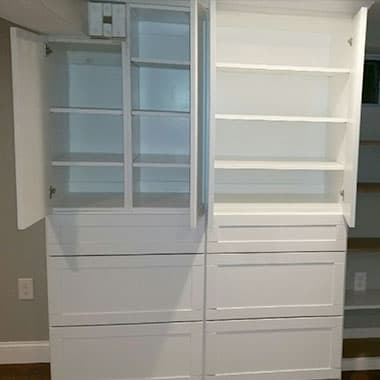
A built-in starts with what you'll put in it, not with the wood. Books, a TV, shoes, board games and linens all need different depths and shelf spacing.
- Talk through the use. What goes in it, who uses it and what you want hidden behind doors.
- Measure the real space. Walls, floor, ceiling, outlets, vents, windows and radiators.
- Sketch options. Open shelves vs. doors, drawers vs. cubbies, glass fronts vs. solid.
- Talk about cost. Where a simpler door style or fewer drawers saves money without looking cheap.
- Build and fit. Pieces are built, set in place and scribed to the walls and floor.
- Trim and finish. Molding ties it into the room, then it's caulked and painted or stained.
Matching the trim so it looks original.
The details that make a built-in look like it came with the house are the trim pieces. Baseboard, crown and casing on the new piece should match the profiles already in the room. In older homes, those profiles may not be sold anymore, so they sometimes have to be pieced together from stock molding or matched as closely as possible.
Scribing matters just as much. Where the cabinet meets a wavy plaster wall or a sloped floor, the edge is cut to follow that line, so there's no gap to fill. Paint grade or stain grade, that's what keeps it from looking like furniture pushed against the wall.
You can see more finished pieces in our gallery. For homes north of Boston, our page on carpentry and built-ins in Melrose talks about the older houses we work in. And when you start collecting quotes, our guide to comparing contractor estimates can help.
Common questions
They are when the space is odd, like an alcove, a window wall or around a mantel, and you plan to stay. On a plain flat wall, good store-bought furniture often does the same job.
Usually, yes. Matching the trim color makes the piece look like part of the house, though a contrasting color can work as a feature.