Short answer: keep a tub if anyone in the house bathes small kids or likes a soak, or if it's the only tub you have. Go with a walk-in shower if stepping over a tub wall is getting harder, or if the tub mostly holds a shower curtain and a pile of toys nobody plays with. The rest of this guide covers the choices that come after that one.
Who should keep a tub.
- Families with young kids. Bath time in a shower stall is a wrestling match.
- People who actually soak. If you use it, keep it. A good tub is hard to give up.
- Houses with only one tub. Plenty of buyers with young families look for at least one, so think about resale before you pull the last one out.
- Pet owners. Washing a muddy dog is easier with high sides.
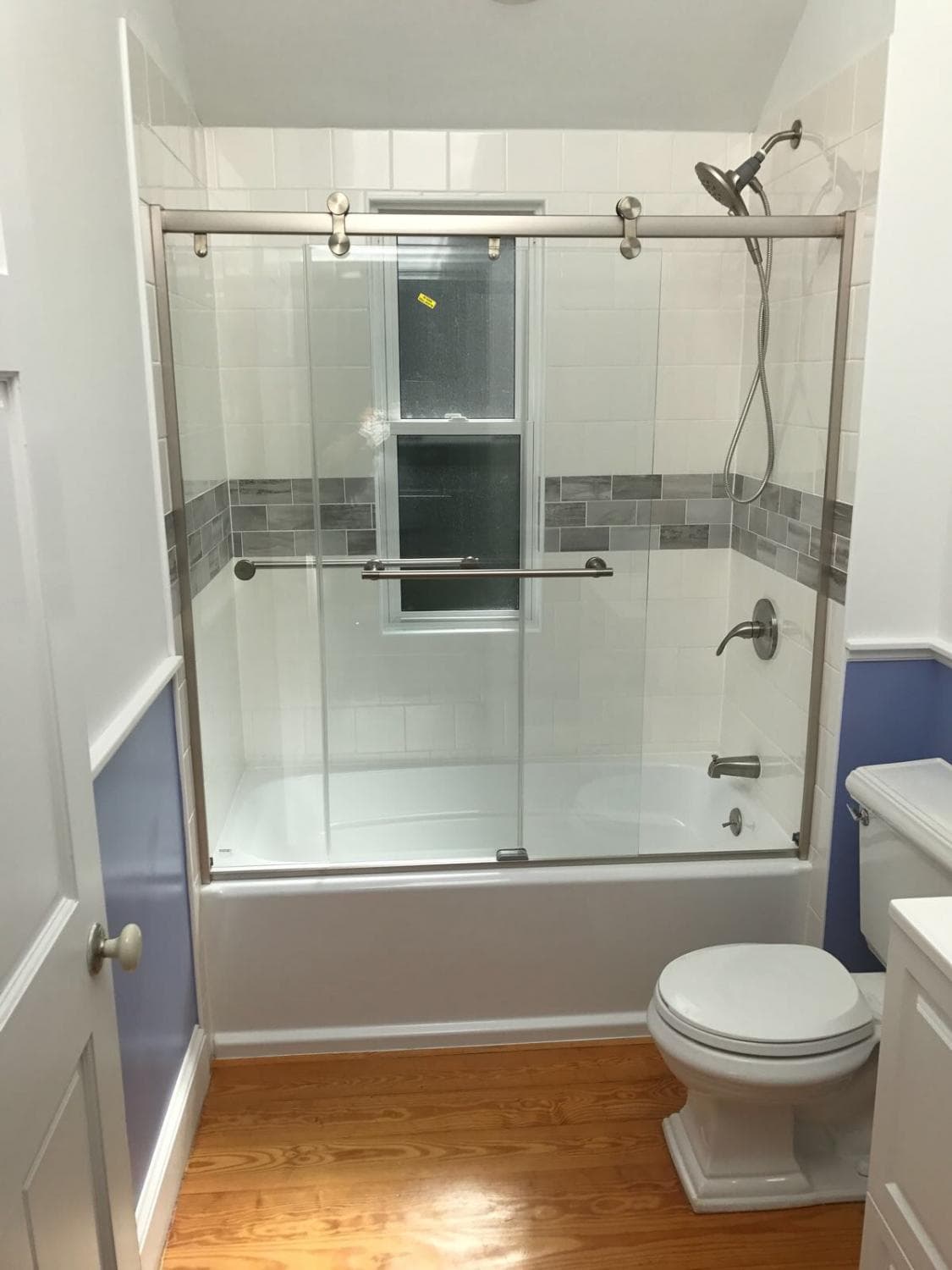
Keeping the tub doesn't mean keeping the old look. A tub with tile run all the way to the ceiling, a niche or two, and a glass panel instead of a curtain can feel like a different room.
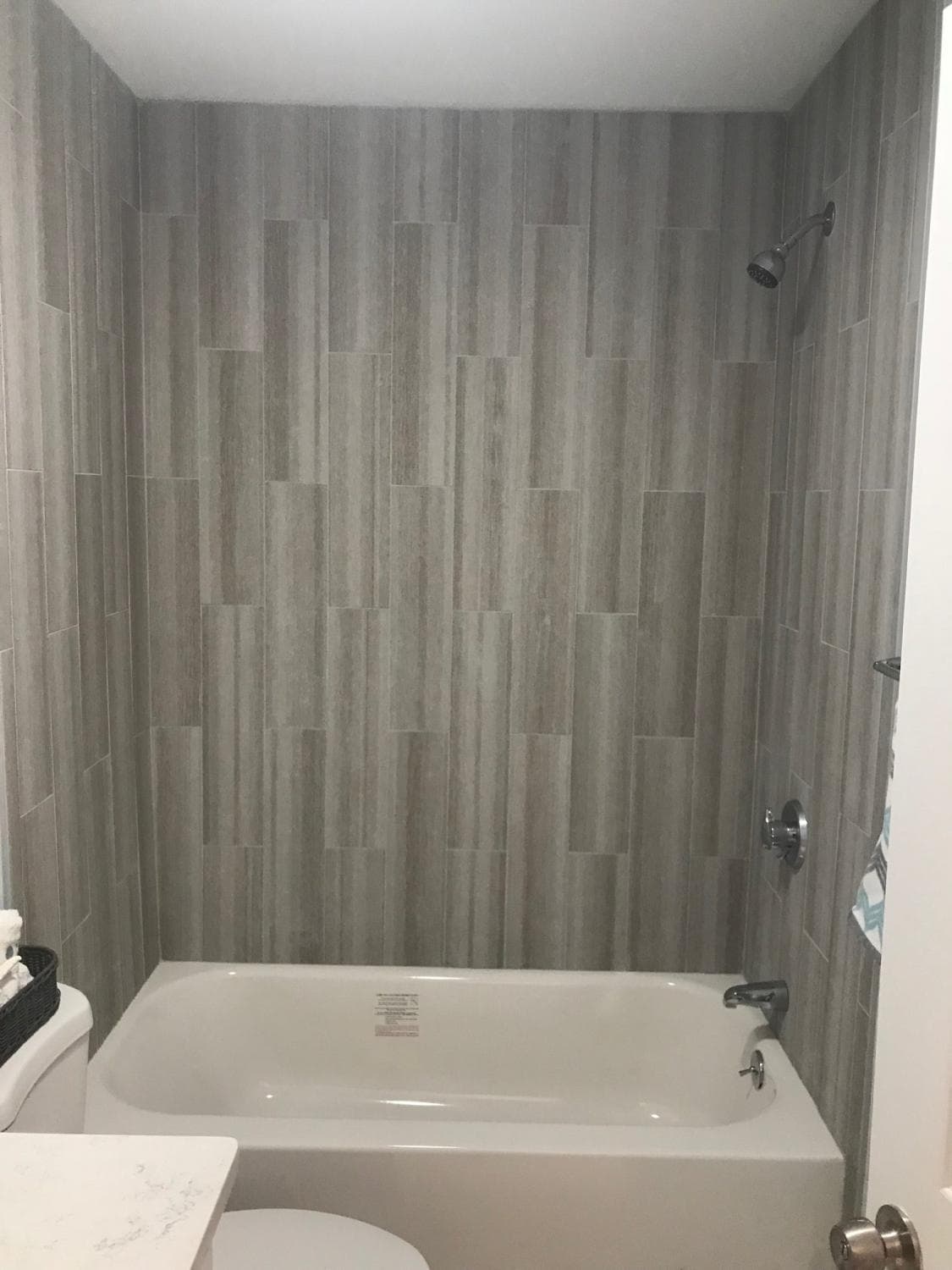
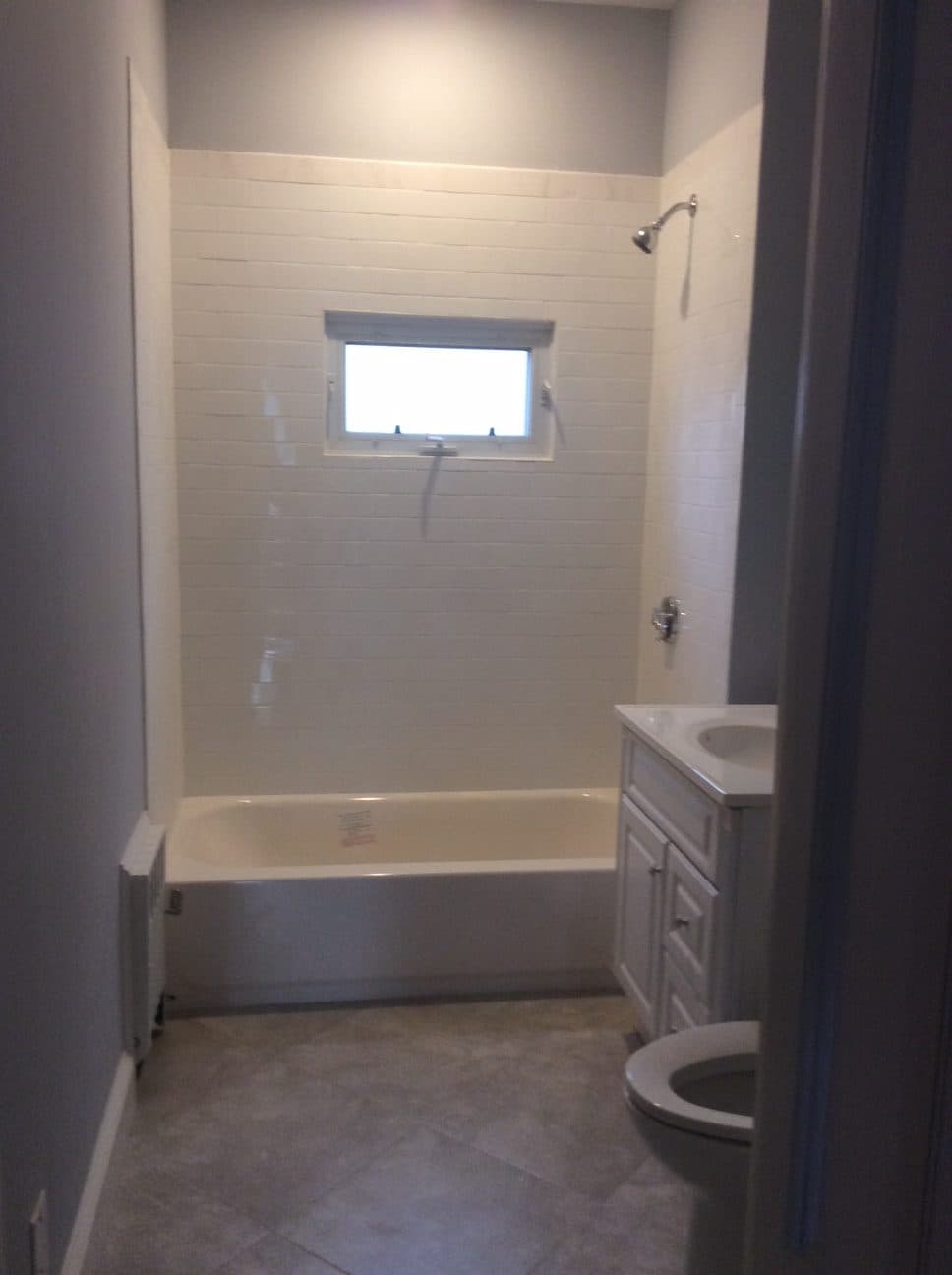
Who's better off with a walk-in shower.
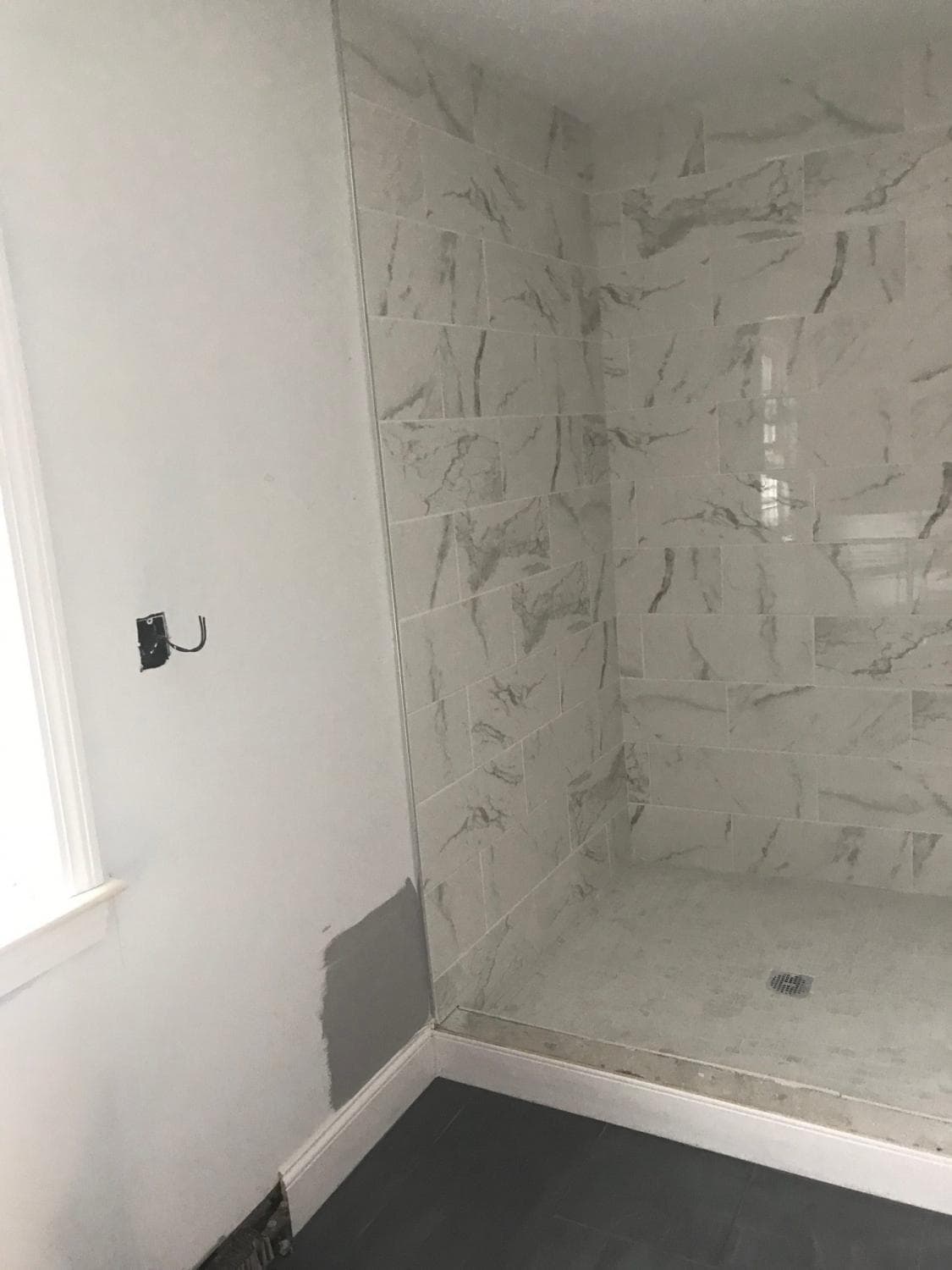
A walk-in shower makes sense when getting in and out matters more than soaking. That includes anyone planning to stay in the house as they get older, anyone with bad knees or hips, and tall people who are tired of ducking under a low showerhead over a tub.
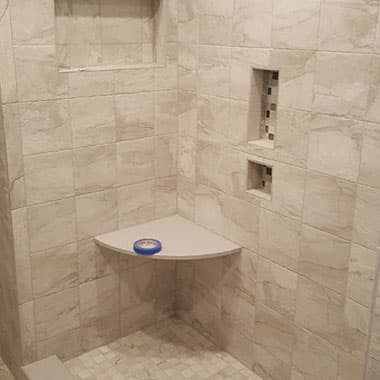
Plan the details while the walls are open. A low curb, or no curb at all, is easier to step over. Grab bars need solid blocking behind the tile, and adding blocking later means tearing tile off. A bench or corner seat is handy for shaving legs and for anyone who needs to sit. Even if you don't want grab bars yet, ask for the blocking now.
Tile or a panel surround.
Once you know tub or shower, the next choice is what goes on the walls. The two broad options are tile and a manufactured surround: one-piece units or panel kits in acrylic, fiberglass or solid-surface material.
Panel surrounds.
- Few or no grout lines, so cleaning is quick.
- Fewer choices of look, and the sizes come from the factory, not your room.
- One-piece units often won't fit through the doors and stairways of an older house, so panel kits are more common in a remodel.
- A crack or deep scratch usually means replacing a whole panel.
Tile.
- Any size, color or pattern, fit to your exact walls.
- Niches, benches and ledges go wherever you want them.
- A cracked tile can be cut out and replaced on its own.
- More grout to keep clean, unless you choose larger tile.
Neither is wrong. Panels suit a guest bath that sees light use. Tile suits a main bathroom you'll use every morning and want to like for a long time.
What makes tile last is behind it.
Tile itself doesn't keep water out. Grout lets moisture through, so the wall behind it has to handle being wet. When a tile shower fails, the cause is usually the layers you never see.
- Cement board or foam board on the walls, not plain drywall.
- A waterproofing membrane over the board, with the seams and corners sealed.
- A shower floor sloped toward the drain, so water doesn't sit in the corners.
- Niches waterproofed like the rest of the wall, with a sill that tips water back into the shower.
- Sealed openings around the valve and showerhead.
Niches, grout and everyday upkeep.
A recessed niche beats a hanging caddy. Put it on an interior wall when you can, since a niche cut into an outside wall leaves less room for insulation on a cold New England night. Size it for the bottles you actually buy, and set it where you can reach without stretching across the spray.
Grout is where most of the upkeep lives. Larger tiles mean fewer grout lines. Mosaics on a shower floor give better grip but more lines to scrub. Ordinary cement grout should be sealed and resealed now and then; when water stops beading on it and starts darkening it, that's your sign. Other grout types resist stains better, so ask what suits the tile you picked.
Tips for a small bathroom.
- A fixed glass panel or clear door opens the room up compared with a curtain.
- Larger tile with fewer grout lines makes walls look calmer and bigger.
- Running the same tile, or the same color, from floor to walls stretches the space.
- Tile to the ceiling makes a low room feel taller.
- A niche takes up no floor or elbow room, unlike a shelf.
- Check that the shower door can swing out without hitting the toilet or vanity, or go with a sliding door.
Take a look at finished bathrooms on our kitchen and bath remodeling page and in the gallery. If you live north of the city, see our notes on bathroom work in Melrose. And if a kitchen is next on your list, here's the order a kitchen remodel happens in.
Common questions
It can. Many buyers with young kids want at least one tub in the house, so if you're removing the last one, weigh how long you plan to stay.
Not well. Tile needs a solid, waterproofed backer, so the old surround should come out and the wall be built up properly behind the new tile.
When it stops shedding water. If drops soak in and darken the grout instead of beading up, it's time to reseal ordinary cement grout.