The right floor depends on the room. A kitchen deals with spills, a bathroom with standing water, a basement with a cool damp slab, and an entry with whatever your boots bring in from February. One material rarely wins everywhere. Here's how to match the floor to the room.
The quick answer, room by room.
- Kitchen: tile or vinyl plank for easy living; hardwood if you're careful with spills.
- Bathroom: tile, nearly always.
- Basement: vinyl plank or tile. Skip solid hardwood.
- Bedrooms, living room, halls: hardwood is hard to beat.
- Entry and mudroom: tile, with darker grout.
What we mean by each.
Hardwood here means solid wood boards that can be sanded and refinished, plus engineered wood, which has a real wood top layer over a more stable core. Tile means porcelain or ceramic, including wood-look plank tile. Vinyl plank means the water-resistant planks that click or glue together and look like wood.
Kitchens and bathrooms: plan for water.
In a kitchen, the question is how you live. Hardwood looks warm and can be refinished down the road, but a slow dishwasher leak or a dog's water bowl can cup the boards. Tile handles anything, though it's hard on dropped glasses and tired feet. Vinyl plank sits in the middle: water-resistant, softer underfoot, and easy to clean.
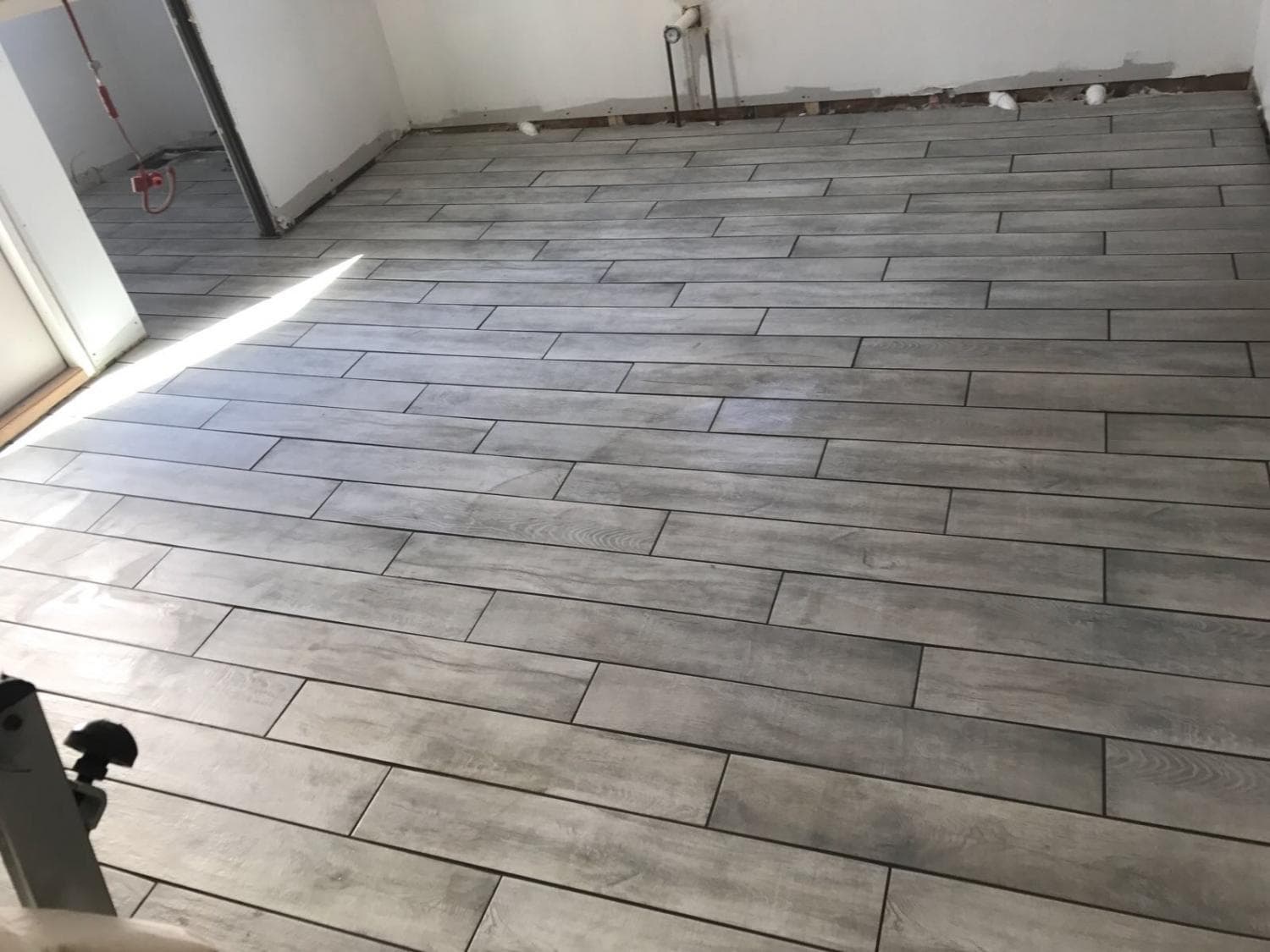
Bathrooms are simpler. Tile is the standard because water gets on the floor every day. Smaller tiles or textured finishes give better grip when feet are wet. Wood-look plank tile is a good way to get the look of boards in a room where real wood doesn't belong.
Open layouts: one floor or two?
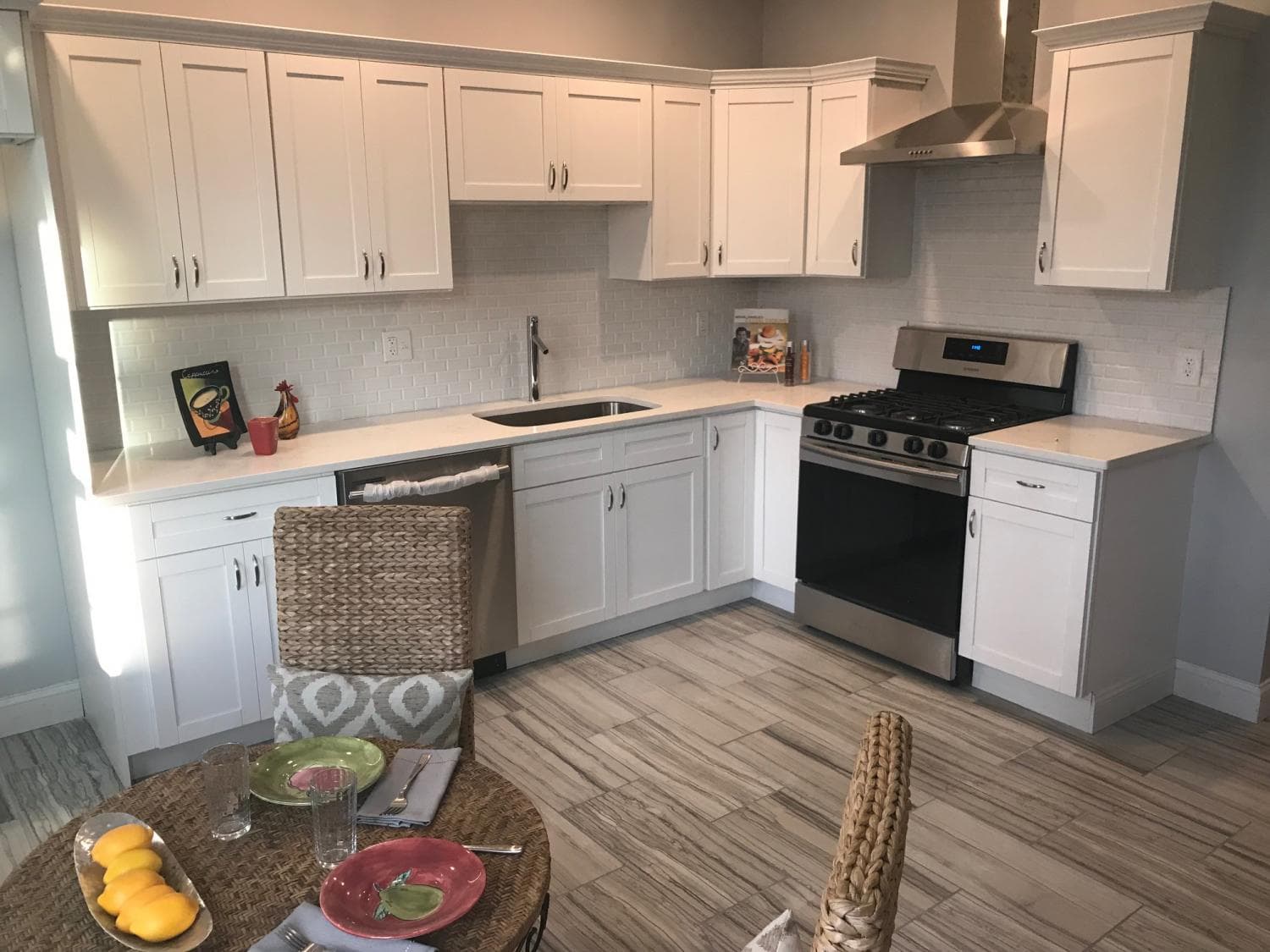
When the kitchen opens into the living room, a single floor running through both makes the space feel bigger and avoids an awkward line where they meet. That pushes you toward something that can handle both rooms, like vinyl plank or wood-look tile, or toward hardwood with careful habits at the sink. If you'd rather split them, put the change at a natural break such as the edge of an island or a wall corner, not in the middle of open floor.
Basements: assume the slab is damp.
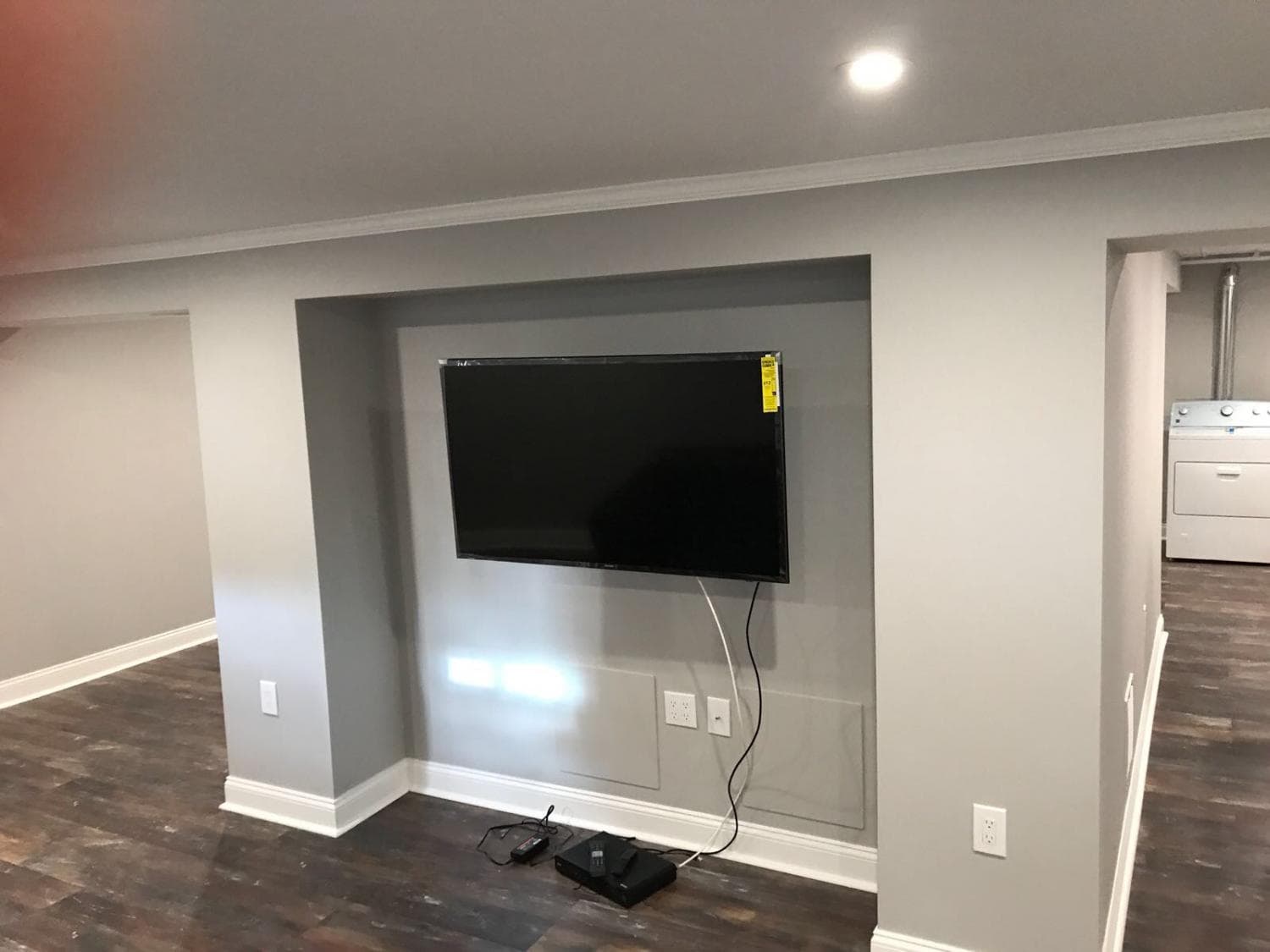
Concrete below grade is cool and can pass moisture even in a basement that never floods. Solid hardwood doesn't like that. Vinyl plank and tile do fine, and engineered wood can work over a dry slab with the right underlayment. Before choosing any floor down there, deal with water first. Our guide to finishing a basement walks through the questions to answer before you start.
Bedrooms, living rooms and halls: where hardwood shines.
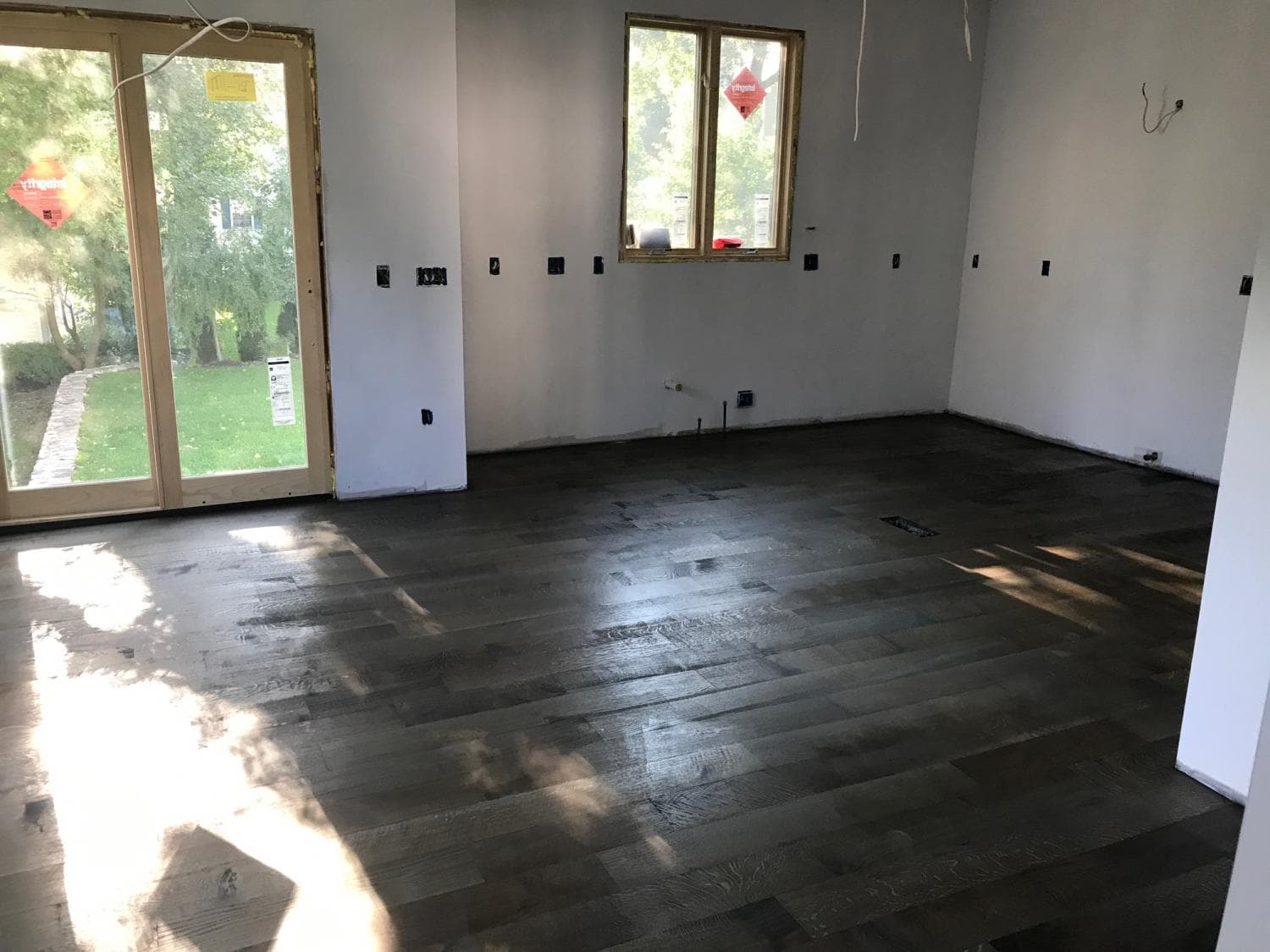
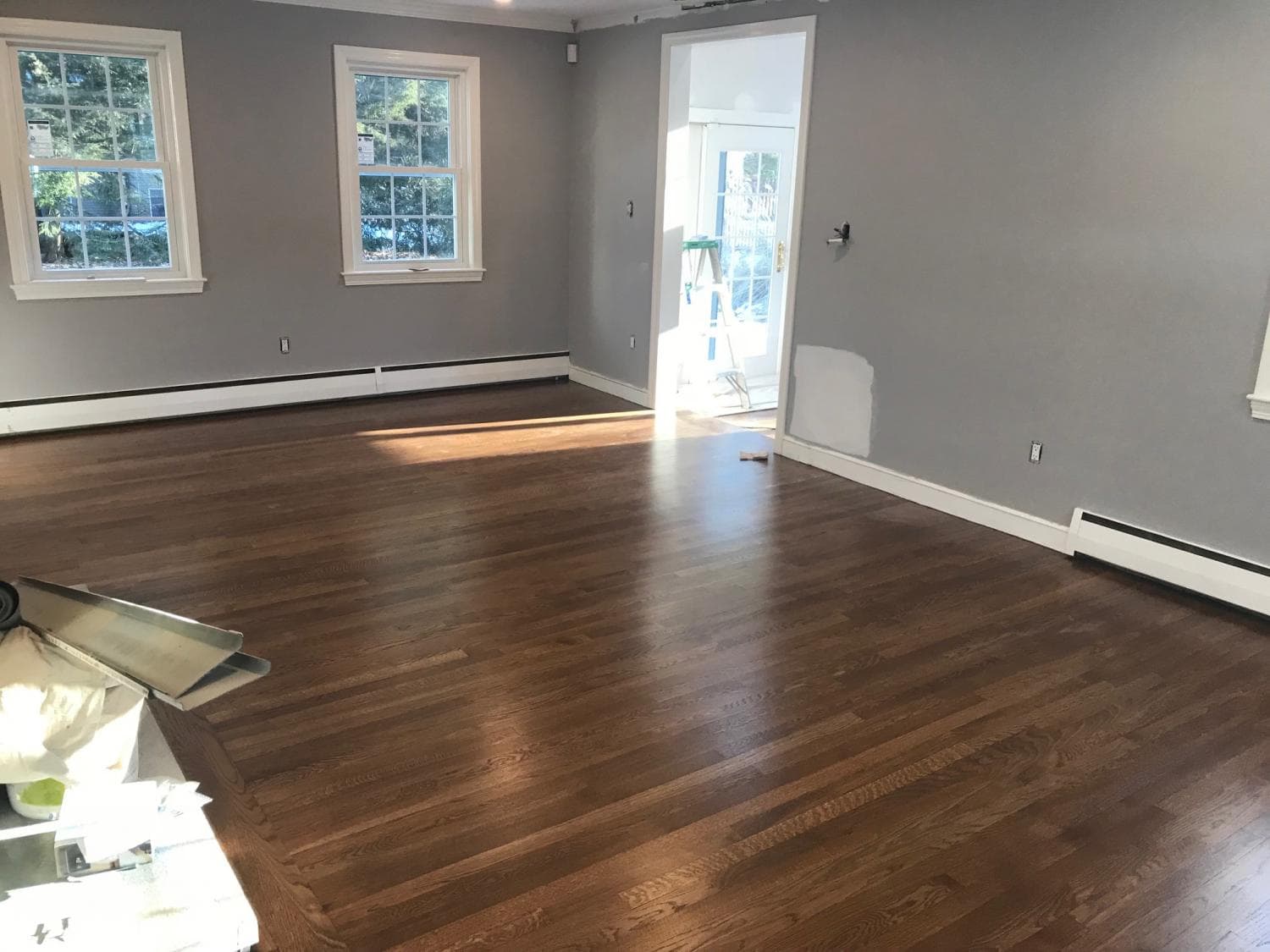
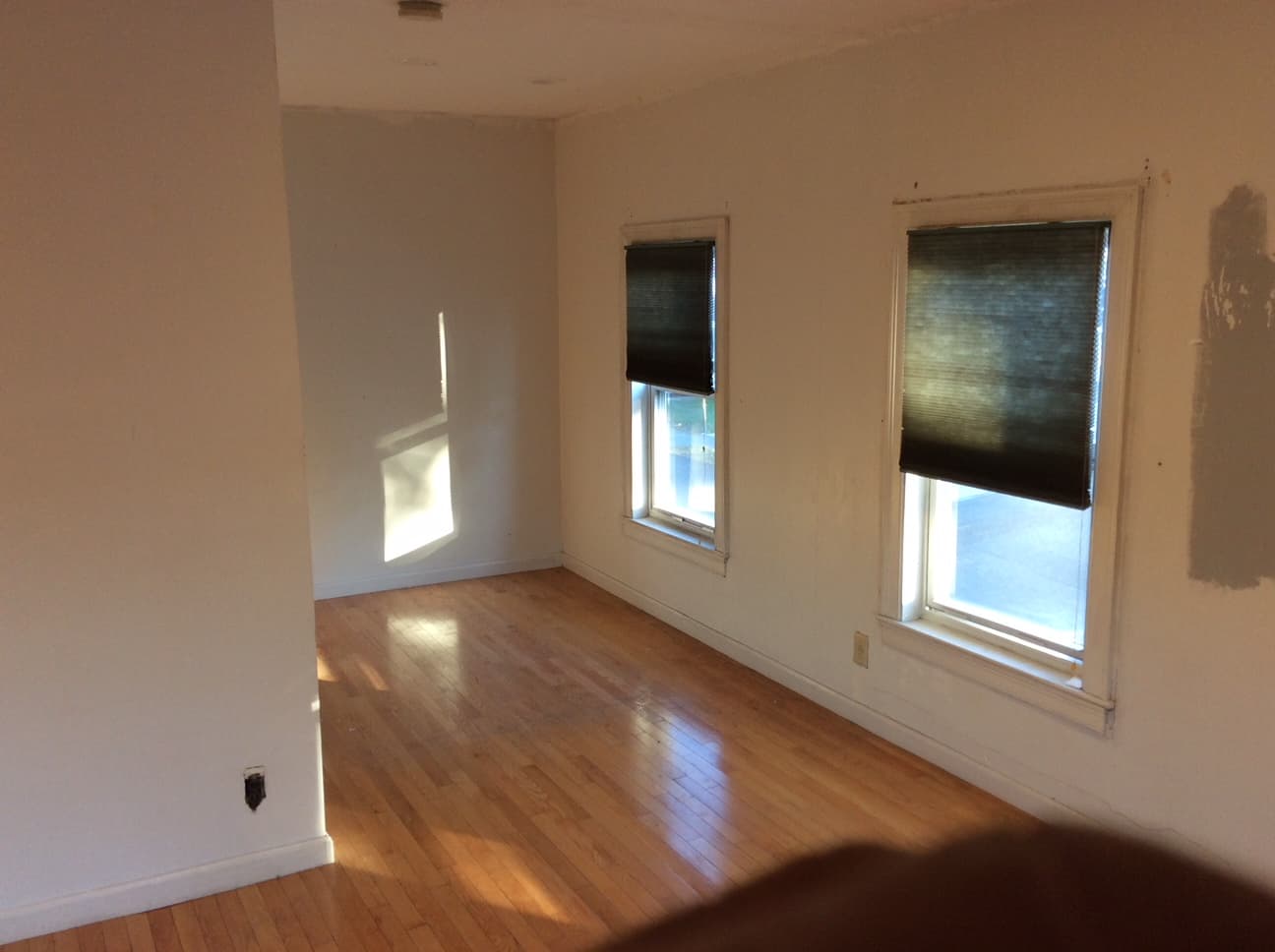
In dry rooms, hardwood is hard to beat. It's warm, quiet compared with tile, and a solid floor can be sanded and refinished more than once instead of replaced. Many older homes around Boston already have hardwood hiding under carpet, and it's worth pulling up a corner to check. Refinishing what's already there often beats buying something new, as long as the boards are sound and thick enough to sand.
New England heat matters here. Wood shrinks when the air dries out in winter and swells again in humid summer. Thin gaps between boards that open up in January and close by July are normal. A whole-house or room humidifier keeps the swing smaller, and new wood should sit in the house for a while before it's installed so it gets used to the air it will live in.
Entries and mudrooms: wet boots and road salt.
The front hall takes the most abuse in the house. Snow melts off boots, sand acts like sandpaper, and road salt leaves a white film that dulls wood finishes. Tile is the practical choice. A mid-tone or darker grout hides the grime that light grout shows by March. If you'd rather keep wood in the entry, put a tiled landing area or a heavy-duty mat right inside the door, and plan on touching up the finish there more often than anywhere else in the house.
Prep, transitions and trim make the job.
Two floors made of the same material can look completely different a few seasons later. The difference is almost always what happened before the first board or tile went down, and the details at the edges.
- Squeaks found and screwed down while the subfloor is exposed.
- Soft or damaged subfloor cut out and replaced, not covered over.
- High spots ground down and low spots filled, so the floor is flat.
- Old layers removed when stacking another floor on top would cause problems at doors and cabinets.
- Tile set over a backer or membrane that stops cracks from coming through.
- Doors trimmed so they swing over the new floor height.
Then the finishing touches. Where two floors meet at a doorway, the transition should be flat or gently ramped, not a lip to trip on. Baseboard and shoe molding cover the expansion gap that wood and floating floors need at the walls. Thresholds, trim and a coat of paint on the baseboards are what make a new floor look finished instead of just installed.
Maily M. hired DT for flooring and drywall and said it simply: "They did an exceptional job in a timely manner." See more floors in the gallery or on our basements and flooring page.
Common questions
Yes, as long as you wipe up spills and keep an eye on the dishwasher and sink. It looks warm and can be refinished, but a slow leak can damage it.
Dry winter heat shrinks the boards, and they swell back in humid weather. Small seasonal gaps are normal; a humidifier helps keep them smaller.
Sometimes. It depends on whether the old floor is flat and sound, and whether the extra height causes trouble at doors, cabinets and stairs. Often the old layer should come up.